
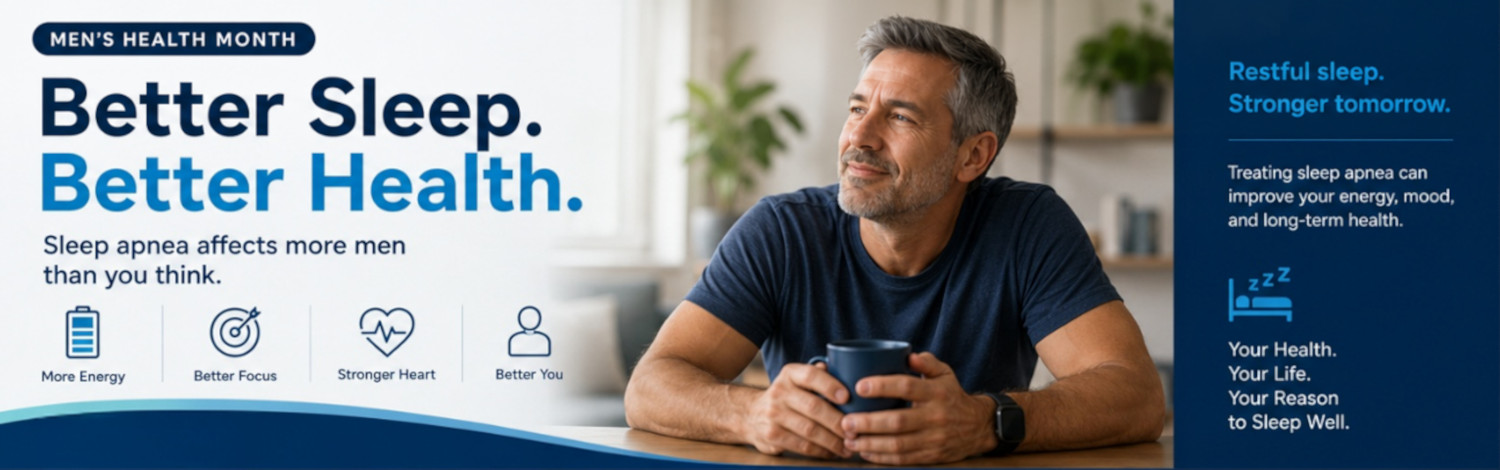
June is Men’s Health Month, a time when many men focus on improving their health through exercise, better nutrition, and preventive care. While those are all important steps, there is one critical area of health that often gets overlooked: sleep.
Many men accept feeling tired as part of life. Long workdays, family responsibilities, and busy schedules can make fatigue seem normal. But if you’re waking up exhausted, relying on caffeine to get through the day, or falling asleep while watching television every evening, your body may be trying to tell you something.
For millions of men, the real problem isn’t a lack of sleep—it’s a lack of quality sleep.
When Sleep Stops Being Restorative
Sleep is when your body recovers and recharges. During a healthy night’s sleep, your brain processes information, your muscles repair themselves, your hormones are regulated, and your cardiovascular system gets a chance to rest.
When sleep is repeatedly interrupted, these important processes can’t occur as effectively.
Many men are surprised to learn that they can spend eight or even nine hours in bed and still wake up feeling exhausted. That’s because the issue isn’t always how long you’re sleeping—it’s how well you’re sleeping.
The Hidden Epidemic: Obstructive Sleep Apnea
One of the most common causes of poor-quality sleep in men is obstructive sleep apnea (OSA).
Sleep apnea occurs when the muscles and tissues of the throat relax during sleep and partially or completely block the airway. When this happens, breathing stops temporarily until the brain signals the body to wake up enough to reopen the airway.
These interruptions can happen dozens—or even hundreds—of times each night.
Many men have no idea it’s happening.
Common signs of sleep apnea include:
- Loud snoring
- Waking up gasping or choking
- Morning headaches
- Dry mouth upon waking
- Daytime fatigue
- Difficulty concentrating
- Irritability or mood changes
- Falling asleep during quiet activities
Because these symptoms often develop gradually, many men dismiss them as stress, aging, or simply being busy.
The Connection Between Sleep Apnea and Men’s Health
Sleep apnea affects far more than energy levels.
Research has shown strong links between untreated sleep apnea and:
- High blood pressure
- Heart disease
- Stroke
- Type 2 diabetes
- Weight gain
- Depression and anxiety
- Reduced cognitive performance
Sleep apnea can also affect hormone regulation, including testosterone production. Testosterone is primarily produced during sleep, and disrupted sleep can interfere with the body’s natural hormone cycles.
While sleep apnea isn’t the only cause of low energy or hormonal changes, it is an important factor that is often overlooked.
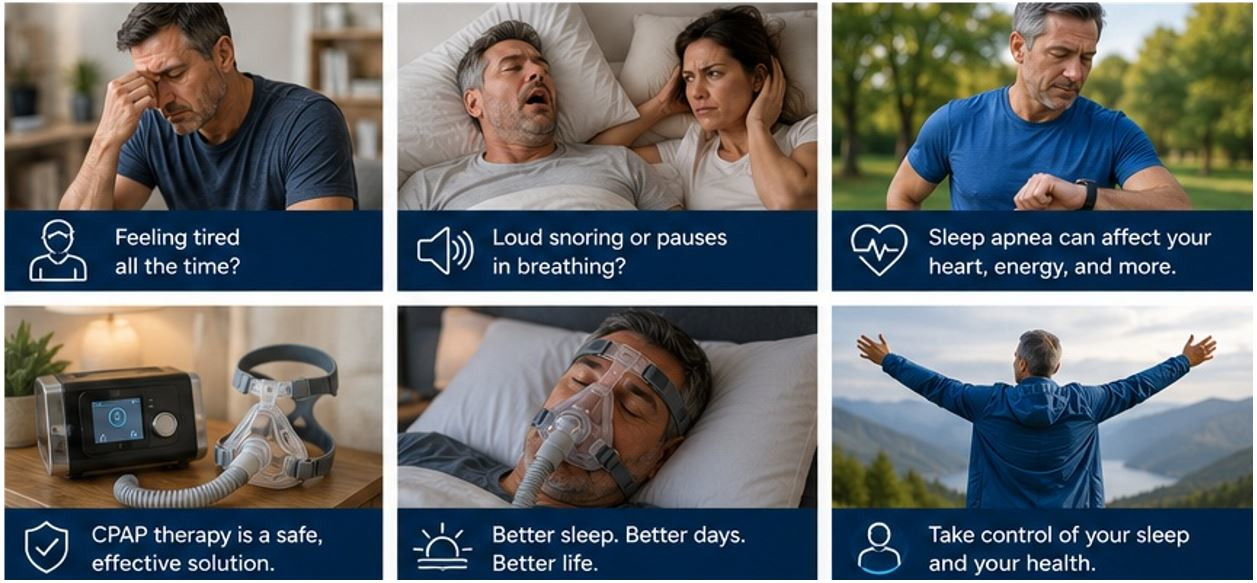
What Your Partner May Notice Before You Do
Interestingly, many men first learn about their sleep apnea because of someone else.
A spouse or partner may notice:
- Loud snoring
- Pauses in breathing
- Restless sleep
- Frequent awakenings
In many cases, these observations lead to a conversation with a healthcare provider and ultimately a sleep study.
If someone has mentioned concerns about your breathing while you sleep, it’s worth taking seriously.
The Good News: Treatment Works
The encouraging news is that sleep apnea is highly treatable.
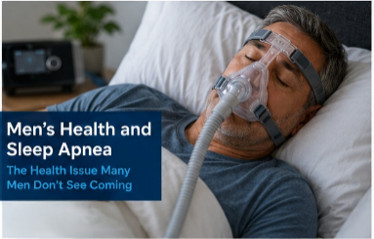
Continuous Positive Airway Pressure (CPAP) therapy remains the gold standard treatment for obstructive sleep apnea. By delivering a gentle stream of air that keeps the airway open, CPAP helps prevent breathing interruptions throughout the night.
Many patients report improvements such as:
- More energy during the day
- Better concentration and focus
- Reduced morning headaches
- Improved mood
- Better blood pressure control
- More restful sleep for both themselves and their partner
Some people notice changes within days, while others experience gradual improvements over several weeks as their body recovers from years of disrupted sleep.
Don’t Ignore the Signs
Men are often reluctant to seek help for health concerns, especially when symptoms seem minor or develop gradually over time.
But persistent fatigue is not something that should simply be accepted.
If you snore loudly, wake up feeling exhausted, struggle with daytime sleepiness, or have been told that you stop breathing during sleep, it may be time to take a closer look at your sleep health.
Invest in Your Health by Investing in Your Sleep
Exercise, healthy eating, and preventive healthcare all play important roles in long-term wellness. But none of them can fully replace the benefits of healthy, restorative sleep.
This Men’s Health Month, consider making sleep a priority.
A simple sleep evaluation could uncover a problem that’s affecting your energy, health, and quality of life—and the solution may be easier than you think.
Ready to Learn More?
At Everything CPAP, we’re passionate about helping people breathe better, sleep better, and live healthier lives. If you think sleep apnea may be affecting you or a loved one, talk with your healthcare provider about a sleep evaluation or contact our team to learn more about sleep apnea testing and treatment options.
References
- American Heart Association. Sleep Apnea and Heart Health.
- National Heart, Lung, and Blood Institute. Why Is Sleep Important?
- American Academy of Sleep Medicine. Obstructive Sleep Apnea Fact Sheet.
- Kohn TP, et al. The Effect of Sleep on Men’s Health. Translational Andrology and Urology. 2020.
- Su L, et al. Association Between Obstructive Sleep Apnea and Male Serum Testosterone: A Systematic Review and Meta-analysis. Andrology. 2022.